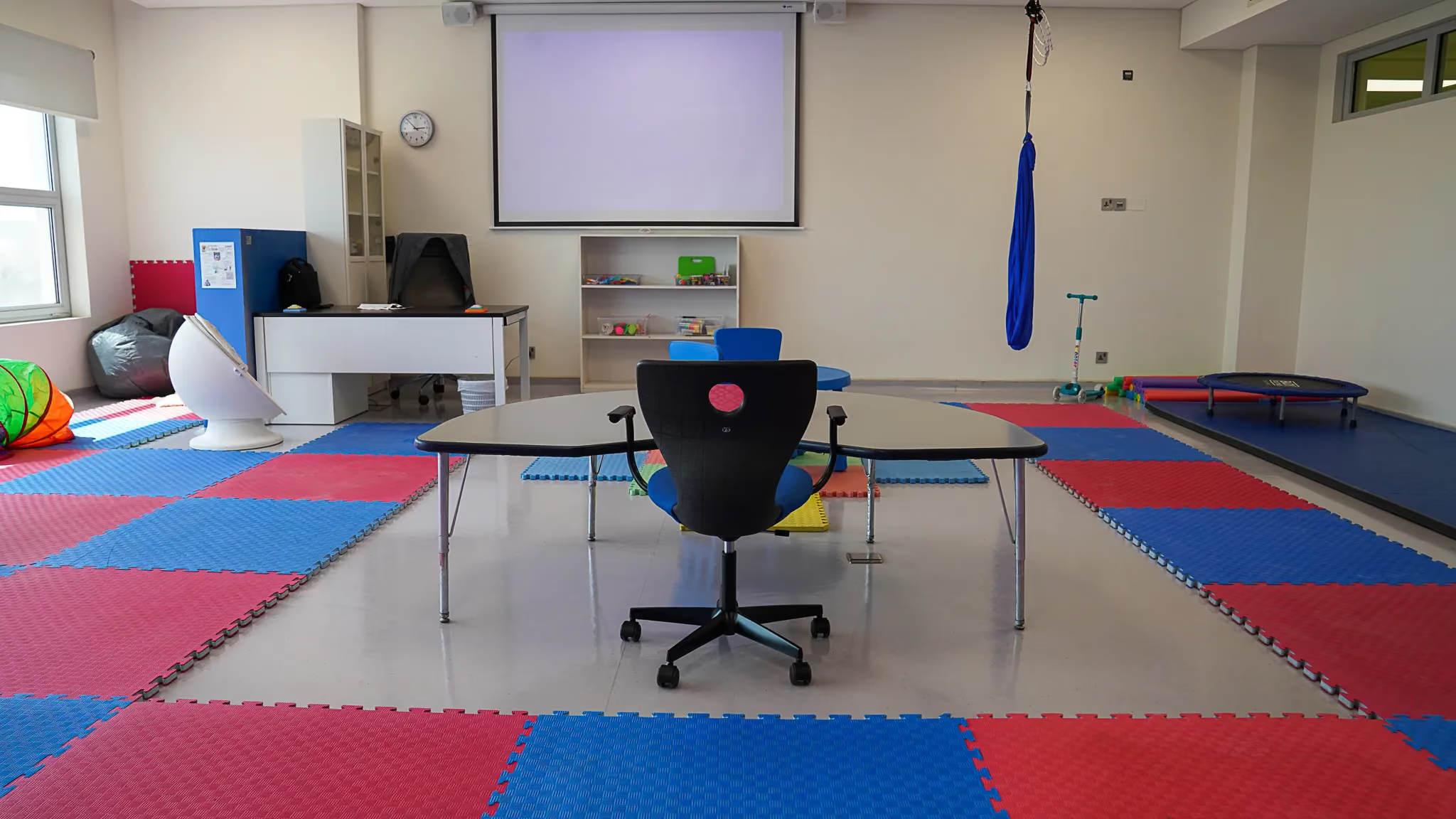
AISJ is committed to inclusive practice. Classroom teachers, Learning Support teachers, teaching assistants, specialists, speech and language pathologists, counselors, and parents all work the same plan around each scholar's needs, and that plan is written down.
Services
ILP
Individual Learning Plans. Scholars accepted into Learning Support have needs documented in an Individual Learning Plan describing abilities, needs, strengths, weaknesses, and individualized goals.
Services
Flexible classroom and small-group instruction. Learning Support instruction is differentiated and flexible, supporting scholars inside the classroom and through limited small-group or one-to-one instruction apart from class.
SLP
Speech and Language Pathology. Speech and Language Pathology services address articulation, phonological awareness, language comprehension and expression, and pragmatic/social communication through individual or small-group sessions with goals tailored to classroom needs.
OT and PT
Occupational Therapy and Physical Therapy. OT and PT focus areas include fine motor skills, sensory integration and regulation, gross motor coordination, body awareness, direct intervention, classroom integration, and collaborative planning with teachers.
ELL
English Language Learners within support services. ELL sits inside the support services too: non-native English speakers access the full AISJ curriculum through screening, ongoing language assessments, pull-out support, in-class co-teaching, and differentiated materials.
Inclusion, families, and admissions
Inclusion
Mild to moderate learning needs. AISJ accepts scholars with learning differences and mild to moderate learning disabilities when it is confident it can meet their needs, a commitment the school makes carefully, because it intends to keep it.
Program fit
Specialized environments when needed. Scholars with intensive learning differences or disabilities may be placed in specialized learning environments with modified schedules and curricula, as determined by AISJ Administration.
Team approach
Teachers, specialists, counselors, and families. Classroom teachers work with Learning Support teachers, teaching assistants, specialist teachers, speech and language pathologists, counselors, and parents.
Admissions
Reports and evaluations for identified needs. Families of scholars with identified learning needs are invited to submit application materials plus relevant assessment reports, evaluations, ILPs, 504s, psychoeducational assessments, or discipline records from the previous school.